
C₂S in Clinker: Nature, Thermodynamics, Reactivity, and Strategic Role in Cement Performance
Dicalcium silicate (C₂S)—known mineralogically as belite—is one of the four main minerals in Portland clinker. Although historically overshadowed by C₃S, its strategic importance in durability, energy efficiency, and sustainability is increasingly recognized. A deep understanding of C₂S requires integrating thermodynamics, reaction kinetics, mineralogy, microstructure, and hydraulic behavior.
1. Mineralogical Identity of C₂S: Polymorphs, Stability, and Transformations
C₂S exhibits four main polymorphs relevant to cement manufacturing:
- γ‑C₂S: stable at room temperature, non‑hydraulic, causes disintegration (“dusting”) if excessive.
- β‑C₂S: hydraulically active, the desired phase in clinker.
- α’‑C₂S: high‑temperature, transient phase.
- α‑C₂S: stable only above ~1450 °C.
Industrial control focuses on stabilizing the β phase during cooling. Insufficient cooling or improper chemistry can trigger β→γ transformation, producing weak, friable clinker.
β‑C₂S Stabilization Factors
- Al₂O₃ and Fe₂O₃: widen β stability range.
- SO₃: promotes β retention and suppresses γ formation.
- Rapid cooling: “freezes” the structure before transformation.
2. Formation of C₂S: Thermodynamics and Kinetics in the Kiln
C₂S forms mainly between 1100 and 1400 °C, preceding C₃S formation:
2CaO + SiO2 → C2S
Thermodynamics
- Favored at moderate temperatures, requiring less energy than C₃S.
- Stable under low free‑lime and controlled Ca/Si ratio conditions.
Kinetics
Formation rate depends on:
- SiO₂ particle size (fine quartz reacts faster).
- CaO diffusion into siliceous phases.
- Fluxes (Fe₂O₃, Al₂O₃, MgO) that enhance reaction mobility.
C₂S nucleates as granular clusters, later evolving into well‑defined crystals during sintering.
3. Microstructure of C₂S in Clinker
Belite appears as:
- Rounded crystals with smooth edges.
- Larger grain size than C₃S, due to earlier formation.
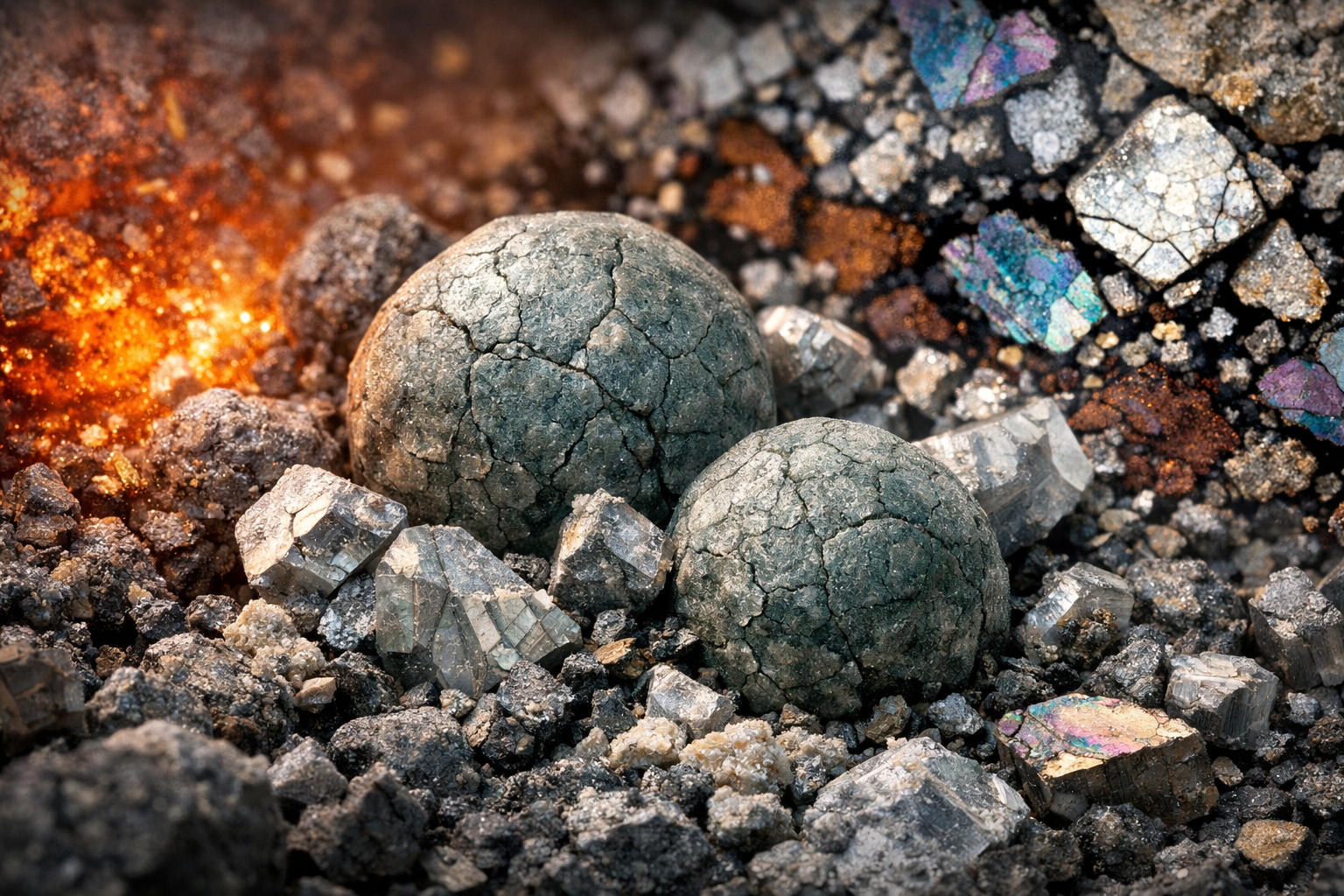
- Gray‑green hue under optical microscopy.
- Al and Fe inclusions that modify reactivity.
Microstructure directly influences:
- Hydraulic reactivity
- Long‑term mechanical strength
- Resistance to sulfate and chloride attack
4. Hydration of C₂S: Slow, Deep, and Durable
C₂S hydrates more slowly than C₃S but yields denser C‑S‑H and less Ca(OH)₂, enhancing durability.
C2S + 4H → C–S–H + Ca(OH)2
Key Features
- Lower heat release → ideal for mass concrete.
- Reduced Ca(OH)₂ → improved chemical resistance.
- Strength gain over time → stable long‑term performance.
C₂S is vital in cements for:
- Hydraulic structures
- Sulfate‑exposed environments
- Low‑permeability concretes
- Low‑heat applications
5. Influence of C₂S on Cement Performance
Advantages
- Superior durability
- Lower heat of hydration
- Enhanced chemical resistance
- Reduced energy demand in kiln
- Lower CO₂ emissions due to less CaO requirement
Disadvantages
- Slower early strength development
- Sensitive β‑phase stabilization
- Greater variability with poor cooling control
6. Industrial Control of C₂S: Operational Keys
Raw Mix Composition
- Adjust Ca/Si ratio to balance C₃S/C₂S.
- Avoid coarse quartz that limits reaction.
Kiln Operation
- Maintain stable sintering temperature.
- Ensure adequate residence time for full formation.
Cooling
- Rapid quenching to preserve β‑C₂S.
- Prevent dead zones in the cooler.
Additives and Fluxes
- SO₃, Al₂O₃, Fe₂O₃ stabilize β phase.
- MgO kept below 2% to prevent expansion.
7. Modern Trends: The Strategic Return of C₂S
Global cement technology is re‑embracing C₂S for environmental and performance reasons:
- Belitic cements with 40–60% C₂S.
- Low‑temperature clinkers (1250–1350 °C).
- CO₂ reduction up to 30%.
- Improved durability in aggressive environments.
C₂S thus becomes a cornerstone of next‑generation sustainable cements.
Conclusion
C₂S is far from a secondary mineral—it is a mineralogical, energetic, and strategic pillar of modern cement. Mastering its formation and stabilization enhances:
- Thermal efficiency
- Concrete durability
- Chemical resistance
- Emission reduction
- Microstructural stability
To master C₂S is to master the mineralogy of cement’s future.