
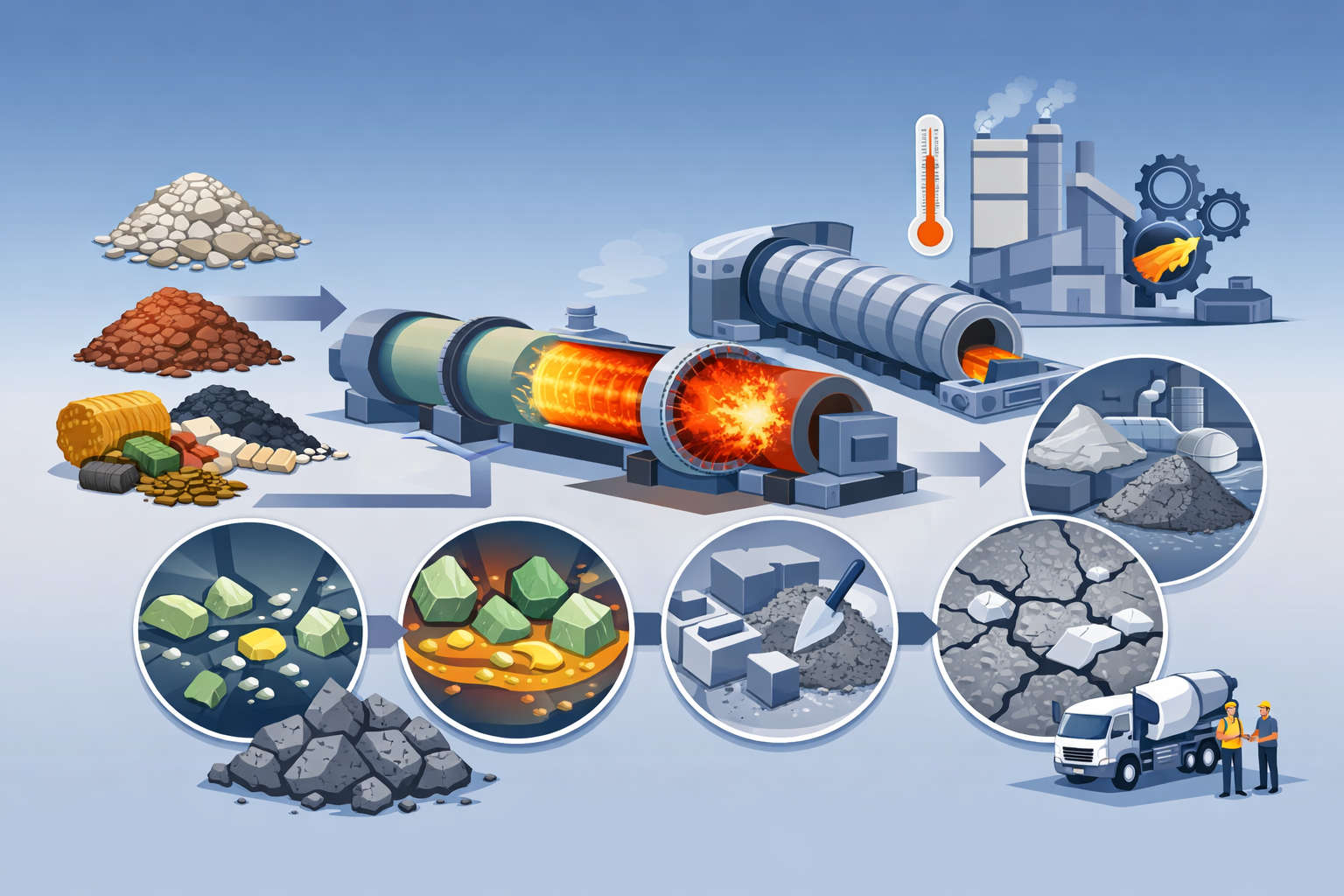
Phosphorus (P₂O₅) in Clinker
1. Origin of Phosphorus in Raw Materials
Phosphorus enters the clinker system mainly through:
- Phosphatic limestones (common in several geological formations)
- Clays containing apatite
- Alternative fuels (biomass, animal meal, sewage sludge)
- Corrective additives with phosphate traces
Typical industrial levels range from 0.05–0.3% P₂O₅, but even small amounts can influence clinker mineralogy.
2. Behavior of P₂O₅ During Clinkerization
2.1. Incorporation into Clinker Phases
Phosphorus does not form a distinct mineral phase. Instead:
- It is incorporated into C₃S, substituting Si⁴⁺ with P⁵⁺.
- A portion remains in the liquid phase, modifying its viscosity.
- Higher concentrations stabilize C₂S, hindering C₃S formation.
3. Effects of P₂O₅ on Clinker Mineralogy
3.1. Reduction of C₃S Reactivity
When P⁵⁺ enters the C₃S lattice:
- It lowers surface energy
- Slows hydration kinetics
- Reduces early strength development
This occurs because phosphorus distorts the alite crystal structure.
3.2. Stabilization of C₂S
Phosphorus promotes belite formation at the expense of alite, leading to:
- Lower heat of hydration
- Slower early strength
- Higher long‑term strength potential
3.3. Modification of the Liquid Phase
P₂O₅ increases the viscosity of the melt, which:
- Reduces ionic mobility
- Hinders C₃S crystal growth
- Affects nodulization and clinker texture
4. Operational Effects in the Kiln
4.1. Clinkerization Temperature
Phosphorus tends to raise the temperature required for C₃S formation due to C₂S stabilization.
4.2. Ring Formation
Although less critical than alkalis or chlorides, P₂O₅ can contribute to:
- Hard, high‑temperature rings
- Increased melt adhesiveness
5. Impact on Cement Performance
5.1. Hydration
Higher P₂O₅ levels lead to:
- Lower 1–3 day strengths
- Flatter hydration curves
- Potential setting delays when combined with high alkalis
5.2. Durability
Moderate phosphorus levels do not significantly affect durability.
High levels may:
- Increase early porosity
- Reduce sulfate resistance (due to altered C₃A and C₂S proportions)
6. Recommended Limits for P₂O₅
| P₂O₅ Level | Expected Effect |
|---|---|
| < 0.10% | No significant impact |
| 0.10–0.30% | Mild changes in C₃S reactivity |
| 0.30–0.80% | Noticeable reduction in C₃S; increased C₂S |
| > 1.0% | Clinker unsuitable for Portland cement |
7. Strategies to Control Phosphorus
7.1. Raw Material Management
- Avoid phosphatic limestones
- Blend clays with low P₂O₅
- Monitor alternative fuel chemistry
7.2. Raw Mix Adjustments
- Slightly increase LSF to counter C₂S stabilization
- Adjust SM to maintain melt behavior
7.3. Kiln Optimization
- Increase burning zone temperature
- Improve raw meal homogeneity to avoid P‑rich zones
8. Executive Summary
Phosphorus (P₂O₅) is a minor component with major influence.
It affects:
- C₃S formation and reactivity
- Liquid phase viscosity
- Clinker mineralogy, favoring C₂S
- Early strength development
Controlling P₂O₅ is essential to ensure clinker quality and kiln stability.