
INTRODUCTION
Process Safety Management (PSM) is a disciplined and systematic approach to identifying, understanding, and controlling the risks associated with industrial processes that handle hazardous materials. According to the Center for Chemical Process Safety (CCPS), process safety goes beyond accident prevention; it represents an integrated organizational practice that ensures facilities operate in a reliable, stable, and resilient manner throughout their entire lifecycle.
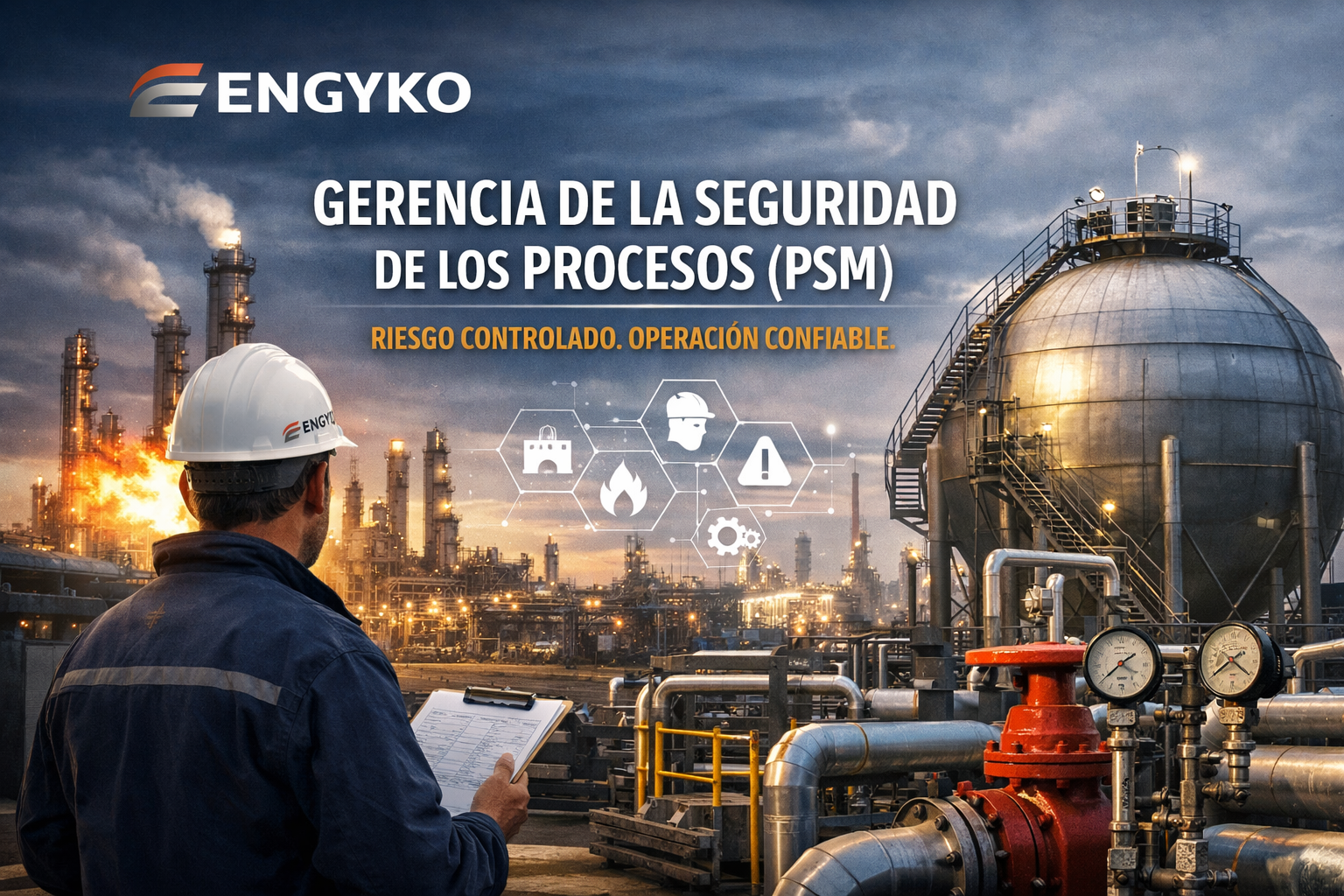
At its core, PSM combines engineering, management, organizational culture, and operational control to prevent releases of energy or materials that could lead to fires, explosions, environmental damage, or loss of life. The CCPS emphasizes that process safety is a shared responsibility involving every level of the organization—from senior leadership, which defines vision and resources, to operations, maintenance, engineering, and contractors who perform critical tasks in the field.
Process Safety Management is built upon principles such as process knowledge, management of change, mechanical integrity, personnel competence, operational discipline, and emergency preparedness. Together, these elements form a management system that anticipates deviations, reduces vulnerabilities, and ensures that protective barriers—both technical and administrative—perform reliably.
In today’s increasingly complex industrial environment, PSM stands as a strategic pillar for operational continuity, asset protection, and corporate sustainability. Adopting CCPS guidelines not only strengthens the prevention of major incidents but also fosters a culture where safety is viewed as an organizational value and a competitive advantage.